What Is Requirements Engineering? Process, Benefits and Best Practices
What is Requirements Engineering? Requirements Engineering is the structured process of discovering, analyzing, documenting, verifying, validating and managing requirements throughout the product and software development lifecycle. As products become increasingly complex, software-defined and multidisciplinary, requirements provide an important connection between stakeholder needs and engineering execution.
A requirement can define a capability, behavior, constraint or condition that a product or system must satisfy. Requirements may originate from customers, end users, business stakeholders, engineering teams, regulatory bodies and other stakeholders involved in product development.
The purpose of Requirements Engineering is not simply to create a list of requirements. It establishes a shared and testable understanding of what must be delivered while providing a controlled way to refine and manage requirements as products evolve.
What Is Requirements Engineering?
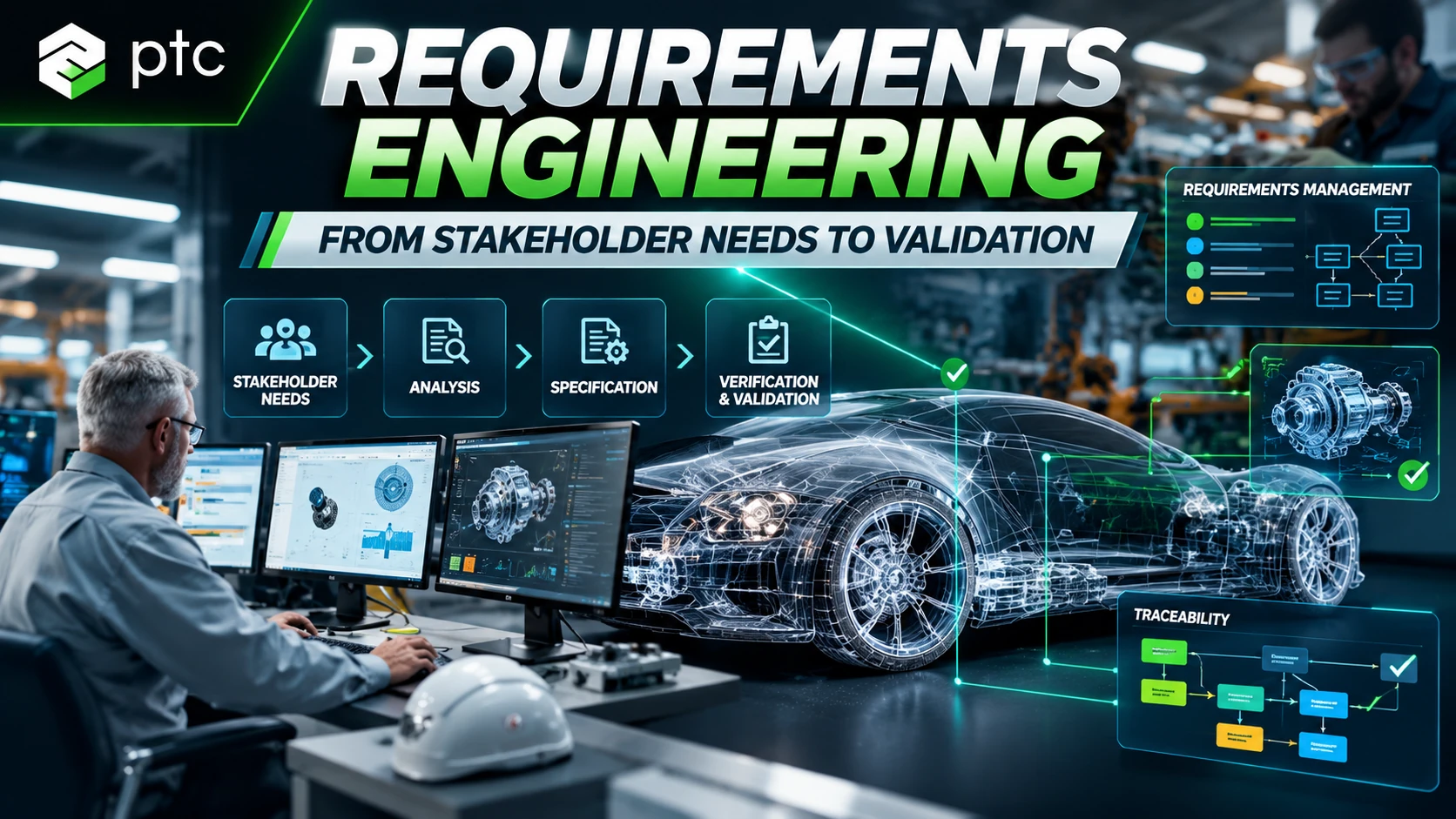
Requirements Engineering combines the activities required to identify stakeholder needs, develop structured requirements, analyze dependencies and feasibility, verify requirement quality, validate stakeholder intent and manage changes throughout development.
A simplified workflow can be represented as: Stakeholder Needs → Requirements Elicitation → Analysis → Specification → Verification & Validation → Requirements Management → Design & Development → Testing → Release.
Requirements Engineering therefore bridges stakeholder expectations with design, implementation, testing, validation and product delivery.
What Is a Requirement?
A requirement defines a capability, behavior, constraint or condition that a system or product must satisfy. Requirements can address functionality, performance, safety, reliability, security, usability, interfaces, compliance and other technical or business considerations.
Well-structured requirements provide engineering teams with clearer guidance for downstream design, development and verification activities.
Functional vs Non-functional Requirements
| Requirement Type | Purpose | Example Area |
|---|---|---|
| Functional Requirement | Defines what the system must do | System functions, behavior and capabilities |
| Non-functional Requirement | Defines how the system should perform or constraints it must satisfy | Reliability, performance, security, usability and scalability |
Why Is Requirements Engineering Important?
Unclear, incomplete, inconsistent or poorly managed requirements can create problems that only become visible after design, implementation or testing has progressed. Resolving such issues later can affect more downstream activities than identifying them earlier in development.
Requirements Engineering provides structure for defining stakeholder expectations, validating assumptions and maintaining alignment between requirements, risks, designs, tests, changes and releases.
This becomes increasingly important for software-defined and multidisciplinary products where a single change may affect hardware, software, electronics, verification and documentation.
Requirements Engineering vs Requirements Management
Requirements Engineering covers the broader discipline of eliciting, analyzing, specifying, verifying, validating and managing requirements. Requirements Management focuses on maintaining accurate, connected and actionable requirements as products and projects evolve.
| Requirements Engineering | Requirements Management |
|---|---|
| Stakeholder needs | Lifecycle management |
| Elicitation and analysis | Version and change control |
| Specification | Traceability |
| Verification and validation | Impact analysis |
| Requirement development | Stakeholder collaboration |
What Are the Key Activities in the Requirements Engineering Process?
1. Elicit Stakeholder Needs
Requirements elicitation identifies stakeholder needs, business objectives, technical constraints and user expectations before development begins. Teams may gather information through interviews, workshops, user research, process analysis and collaborative reviews.
2. Analyze and Prioritize Requirements
Requirements analysis helps identify conflicts, dependencies, assumptions, feasibility concerns and gaps. Requirements can then be prioritized according to stakeholder value, technical constraints, risk, regulatory obligations and intended use.
3. Specify Requirements
Requirements should be documented in a clear, consistent and structured form. Effective requirements should be sufficiently unambiguous, testable and traceable to guide downstream engineering activities.
4. Verify and Validate Requirements
Requirements Verification evaluates whether a requirement is well formed, clear, consistent, feasible and testable. Requirements Validation evaluates whether documented requirements accurately represent stakeholder needs, intended use and applicable constraints.
5. Manage Requirements and Change
Requirements evolve as priorities, regulations and engineering information change. Requirements Management provides mechanisms for version control, traceability, stakeholder alignment and impact analysis so teams can understand how changes affect designs, tests, releases and related development activities.
What Is Requirement Traceability?
Requirement Traceability is the ability to follow relationships between requirements and related development artifacts such as stakeholder needs, designs, risks, test cases, change requests and releases.
A simplified traceability chain can be represented as: Stakeholder Need → System Requirement → Design → Implementation → Test Case → Verification Result → Release.
Traceability helps teams determine which requirements have been tested, which tests support specific requirements and what downstream elements may be affected when a requirement changes.
What Is Impact Analysis?
Impact Analysis helps teams evaluate the potential consequences of a proposed change before implementation. When a requirement changes, connected information can help identify affected designs, risks, tests, documentation and releases.
Common Requirements Engineering Challenges
Scope Creep
Scope creep occurs when requirements are added without appropriate evaluation or approval. Uncontrolled expansion can affect development scope, schedules and priorities.
Over-engineering the Process
Not every project requires the same degree of documentation or process complexity. Requirements processes should be proportional to product complexity, project risk and regulatory requirements.
Lack of Feedback and Reviews
Requirements developed without sufficient stakeholder review may contain assumptions, omissions or ambiguities. Regular reviews can identify issues earlier and improve alignment between business and engineering teams.
Excluding Important Stakeholders
Engineering, quality, manufacturing, service, business teams and end users can provide different perspectives. Appropriate stakeholder participation helps teams identify requirements and constraints more comprehensively.
6 Benefits of Requirements Engineering
1. Reduced Rework and Development Risk
Clarifying and validating requirements early can identify gaps before they create avoidable downstream rework.
2. Clearer Scope and Priorities
Documented requirements clarify project boundaries, stakeholder expectations and priorities.
3. Improved Development Efficiency
Accessible requirements reduce conflicting assumptions and create a shared reference for engineering, development and testing teams.
4. Support for Quality and Compliance
Traceable requirements can provide evidence connecting requirements with implementation, testing and validation activities.
5. Better Change Control
Traceability and impact analysis provide context for evaluating requirement changes before implementation.
6. Better Communication
Requirements provide a common reference point for stakeholders, systems engineers, developers, quality teams, testers and management.
 Which Industries Benefit from Requirements Engineering?
Requirements Engineering is particularly relevant to complex and multidisciplinary product development environments, including automotive, aerospace and defense, medical devices, industrial equipment, electronics, high-tech products, embedded systems and software-defined products.
How Does ALM Support Requirements Engineering?
Application Lifecycle Management – ALM manages software or application lifecycles from inception through design, development, testing, deployment and end of life. Requirements Management is an important ALM capability because requirements provide context for downstream development activities.
A connected ALM workflow may link Requirements → Risk → Development → Test → Change → Validation → Release.
Explore the broader PTC software ecosystem for CAD, PLM and ALM technologies.
How Does PTC Codebeamer Support Requirements Engineering?
PTC Codebeamer is an Application Lifecycle Management platform for advanced product and software development. It provides capabilities for requirements, testing, risk, change, configuration and development management within a connected environment.
For Requirements Engineering, Codebeamer can help teams structure requirements, maintain relationships between artifacts, support traceability, manage change and connect requirements with risks, tests and development activities.
PTC also provides implementation guidance for gathering both technical and business-process requirements. See the official Codebeamer Discovery and Requirements Gathering guide.
Requirements Engineering and the Digital Thread
Requirements should not exist in isolation from other engineering domains. In complex products, requirements can connect systems engineering, software development, product information and verification activities as part of a broader Digital Thread.
A simplified architecture can be represented as: Systems Engineering → Requirements & ALM → Product Data & PLM → Design → Verification → Release.
For another perspective on the evolution of requirements and ALM technology, read AI at PTC and artificial intelligence across the product lifecycle.
How Should Organizations Start with Requirements Engineering?
- Identify stakeholders and product scope.
- Assess how requirements are currently captured and stored.
- Define a consistent requirement structure.
- Identify relationships between requirements, risks, tests and changes.
- Establish review and approval workflows.
- Define change control and impact analysis.
- Evaluate the need for a Requirements Management or ALM platform.
Organizations should avoid introducing more process complexity than necessary. Governance should remain proportional to product complexity, development risk, regulatory obligations and team size.
FAQ About Requirements Engineering
What is Requirements Engineering?
Requirements Engineering is the structured process of discovering, analyzing, documenting, verifying, validating and managing requirements throughout product and software development.
What is a requirement?
A requirement defines a capability, behavior, constraint or condition that a system or product must satisfy.
What is the difference between Requirements Engineering and Requirements Management?
Requirements Engineering covers elicitation, analysis, specification, verification, validation and management, while Requirements Management focuses on maintaining, controlling and tracing requirements throughout the lifecycle.
What is Requirements Elicitation?
Requirements Elicitation is the process of identifying stakeholder needs, business objectives, user expectations and technical constraints through interviews, workshops, research, process analysis and collaborative review.
What is Requirement Traceability?
Requirement Traceability is the ability to follow relationships between requirements and related artifacts such as designs, risks, tests, changes and releases.
What is PTC Codebeamer?
PTC Codebeamer is an Application Lifecycle Management platform for advanced product and software development, supporting requirements, testing, risk, change, configuration and related lifecycle activities.
Does Codebeamer support Requirements Management?
Yes. Requirements Management is a core Codebeamer capability and supports requirement management, collaboration and traceability across development activities.
Explore Requirements Management and ALM
As products increasingly combine mechanical, electronic and software capabilities, Requirements Engineering provides a structured foundation for connecting stakeholder needs with development, testing, validation and change management.
CADCAM SOFTWARE is a PTC Gold Partner in Vietnam supporting organizations evaluating PTC technologies for product development, engineering, PLM and ALM.
Learn more from the official PTC Requirements Engineering article or explore the PTC software portfolio from CADCAM SOFTWARE.
CADCAM SOFTWARE COMPANY LIMITED