AI at PTC: How Artificial Intelligence Is Transforming the Product Lifecycle
AI at PTC is being developed with a focus on embedding artificial intelligence directly into the tools and workflows used every day by engineers, product development teams, manufacturing organizations, and service teams. Rather than treating AI as a standalone tool, PTC positions AI on top of trusted product data and integrates it throughout the product lifecycle.
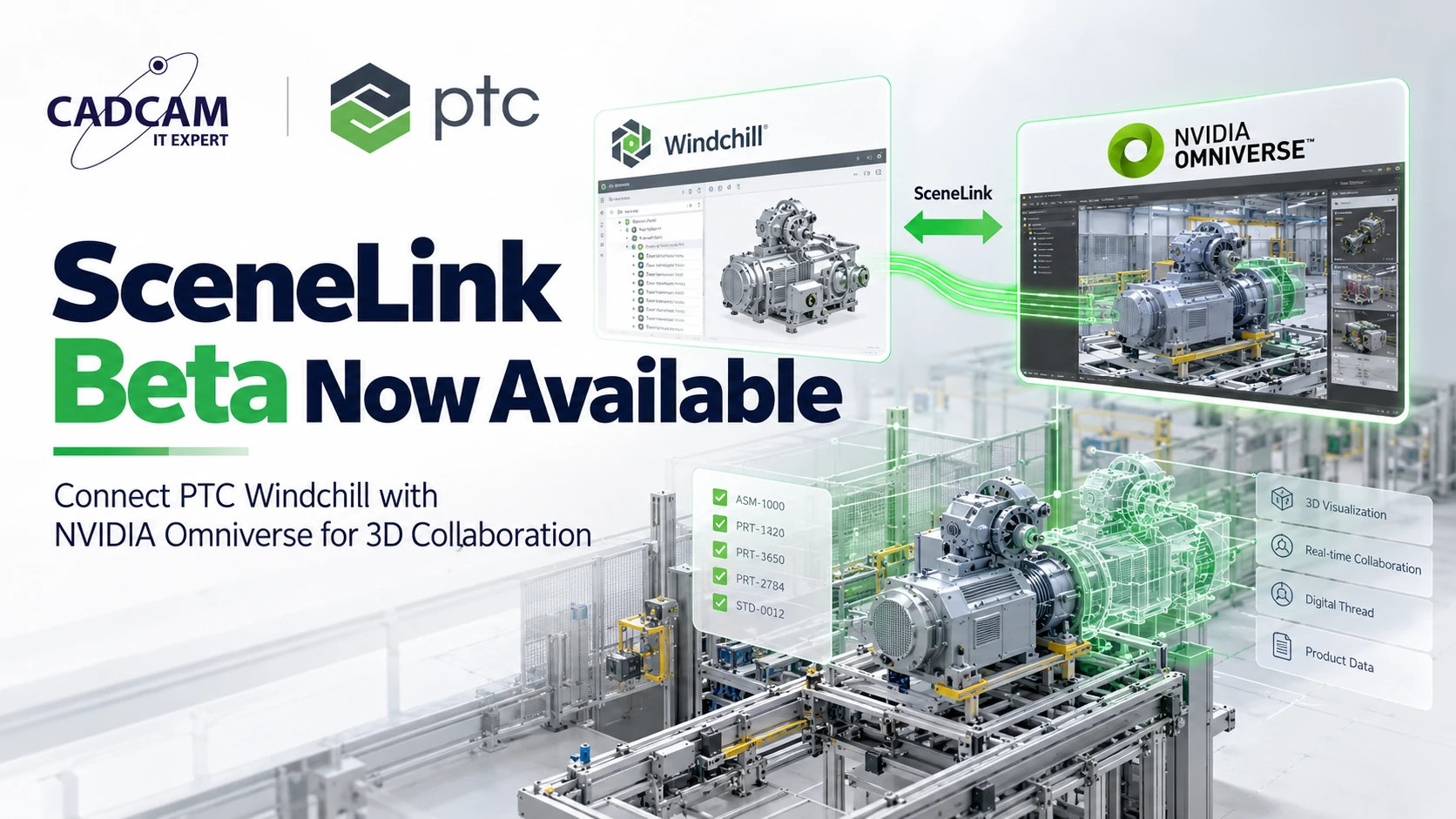
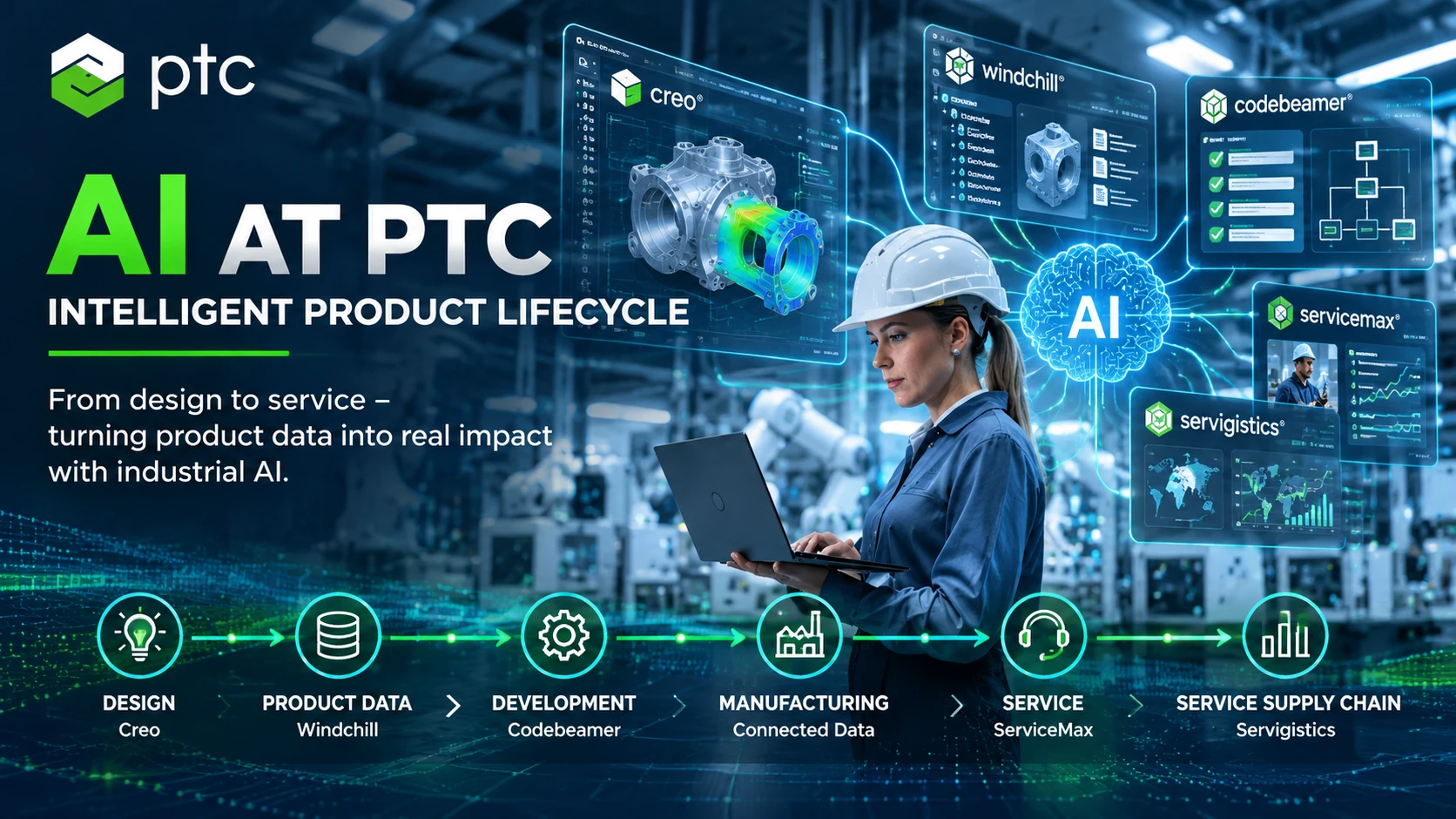
From PTC Creo for CAD design and Windchill for PLM to Codebeamer for ALM, as well as ServiceMax and Servigistics for service operations, AI is becoming an important component of PTC’s Intelligent Product Lifecycle strategy.
As a PTC Gold Partner in Vietnam, CADCAM SOFTWARE follows PTC technology developments to help businesses better understand how AI can be applied to product design, product data management, and related engineering processes.
What Is AI at PTC?
PTC’s AI strategy focuses on bringing artificial intelligence capabilities into enterprise solutions that support the product lifecycle.
According to PTC’s direction, AI is built on a foundation of trusted product data and integrated into the tools and workflows customers already use.
The objective is not simply to add a chatbot to software. AI can help users retrieve information, complete workflow steps, automate tasks, and turn product data into useful information for decision-making.
Product Data → AI → Engineering Workflow → Decisions → Product Innovation
AI and PTC’s Intelligent Product Lifecycle
PTC uses the concept of an Intelligent Product Lifecycle to describe a product lifecycle in which data, processes, and intelligence are connected from design through service.
Within this approach, AI can create value across multiple stages:
- Product design and development.
- Product data and lifecycle management.
- Requirements and Agile Lifecycle Management.
- Field service.
- Service supply chain.
An important requirement is that AI has the appropriate context. In industrial environments, that context may come from CAD data, product structures, BOMs, requirements, change history, service data, and other related engineering information.
AI in PTC Creo – Smarter CAD Design
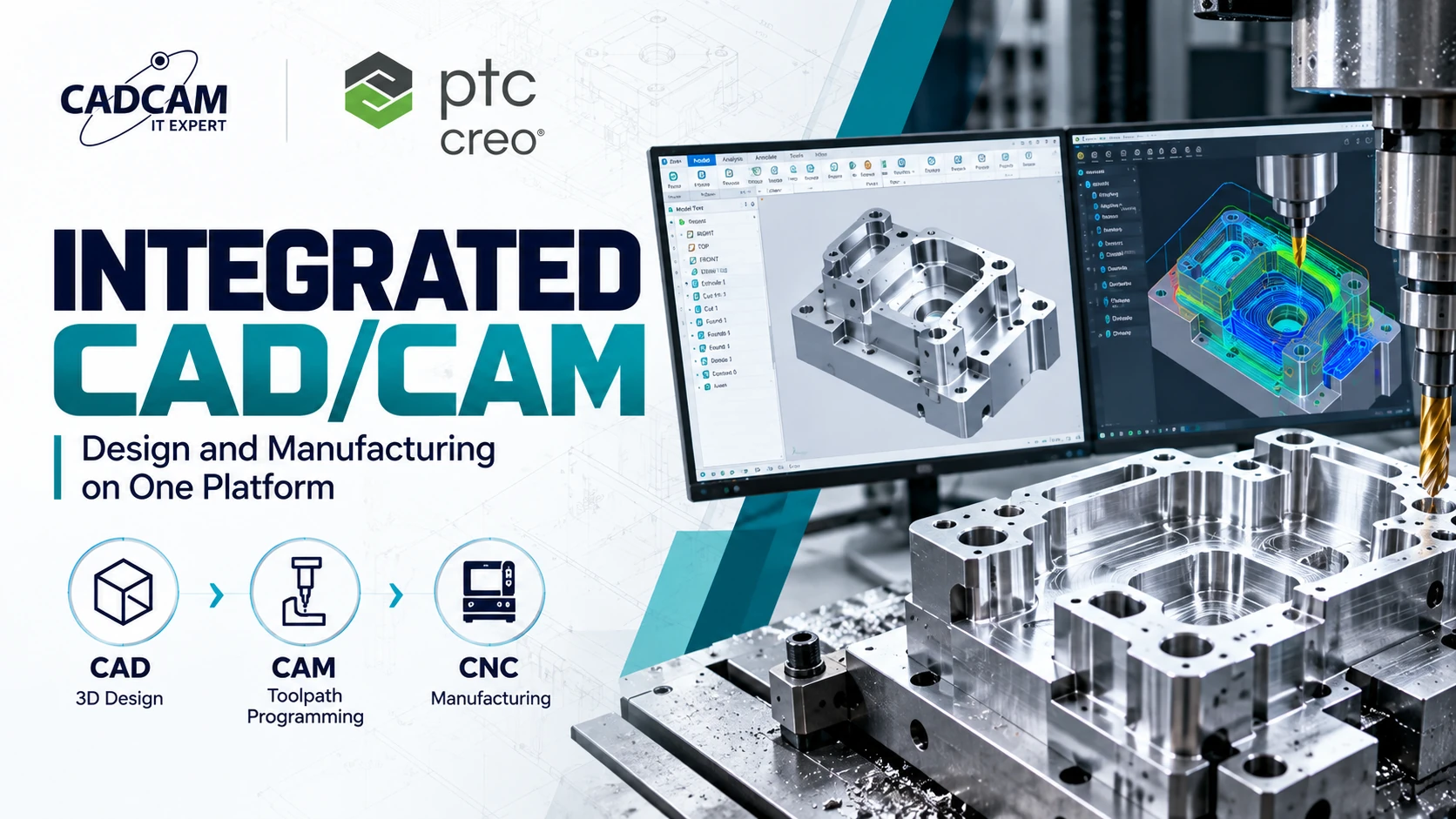
PTC Creo is one of the areas where PTC is applying AI to product design workflows. According to PTC, AI in Creo is intended to automate tasks, improve productivity, reduce errors, and help engineers design more efficiently.
Within CAD, AI and advanced computational methods can support engineers as they explore multiple design alternatives and optimize the product development process.
A notable example in the Creo ecosystem is Generative Design, where engineers define technical objectives and constraints and the system helps explore suitable geometry alternatives.
Businesses that want to learn more about PTC’s CAD platform can visit Creo CAD software.
Will AI Replace Design Engineers?
Within engineering workflows, AI should be viewed as a technology that improves access to information, automation, and decision support. Functional requirements, engineering standards, manufacturability, safety, and design approvals still need to be controlled through the organization’s engineering processes.
Windchill AI – Artificial Intelligence in Product Lifecycle Management
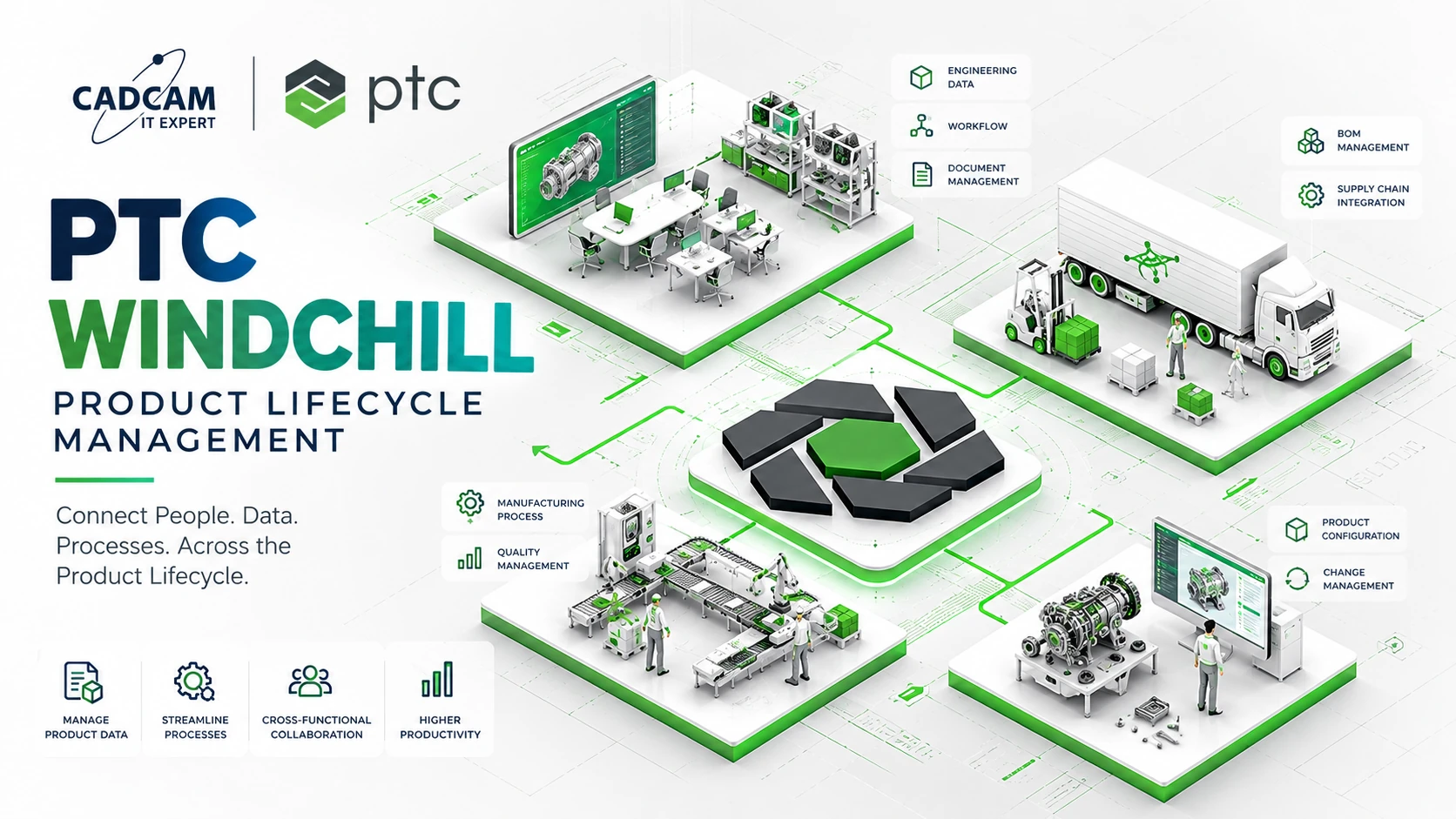
Another important development area is Windchill AI. PTC describes Windchill AI as bringing Generative AI and Agentic AI into PLM to support workflow automation, extract insights, and improve productivity.
This is particularly relevant because PLM contains large amounts of contextual product information:
- CAD data.
- Product structures.
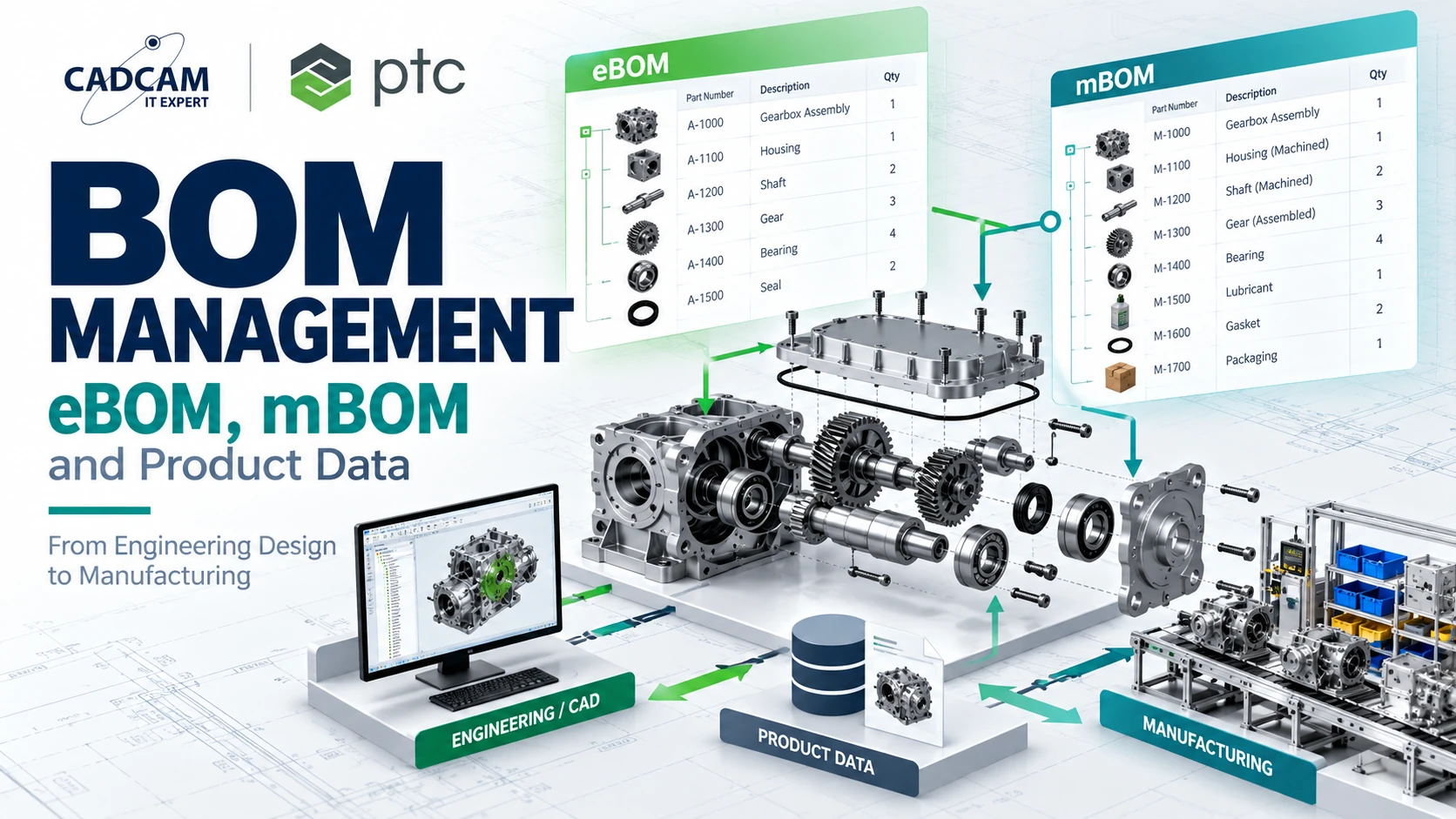
- BOMs.
- Engineering documents.
- Versions and revisions.
- Engineering changes.
- Workflows and approvals.
A well-managed product data foundation enables AI to work with enterprise context instead of relying only on disconnected information.
Learn more about PTC Windchill PLM and how the platform manages CAD data, BOMs, versions, and engineering changes.
Codebeamer AI – AI for ALM and Requirements Management
PTC is also bringing Generative AI into Codebeamer. According to PTC, Codebeamer AI is intended to support requirements and Agile Management, including document analysis, improvements in information quality, and faster product development processes.
This expands the scope of AI from CAD and PLM into requirements management and software/product development.
As products increasingly combine mechanical, electronic, and software components, connecting information across these domains becomes an important part of product development.
ServiceMax AI – Generative AI for Field Service
ServiceMax AI brings Generative AI into field service activities. PTC is positioning this technology to improve service team readiness, accelerate issue resolution, and improve access to service knowledge.
This demonstrates that AI within PTC’s strategy does not stop at the design stage. Data and intelligence can continue to create value after products have entered operation.
Servigistics – AI for the Service Supply Chain
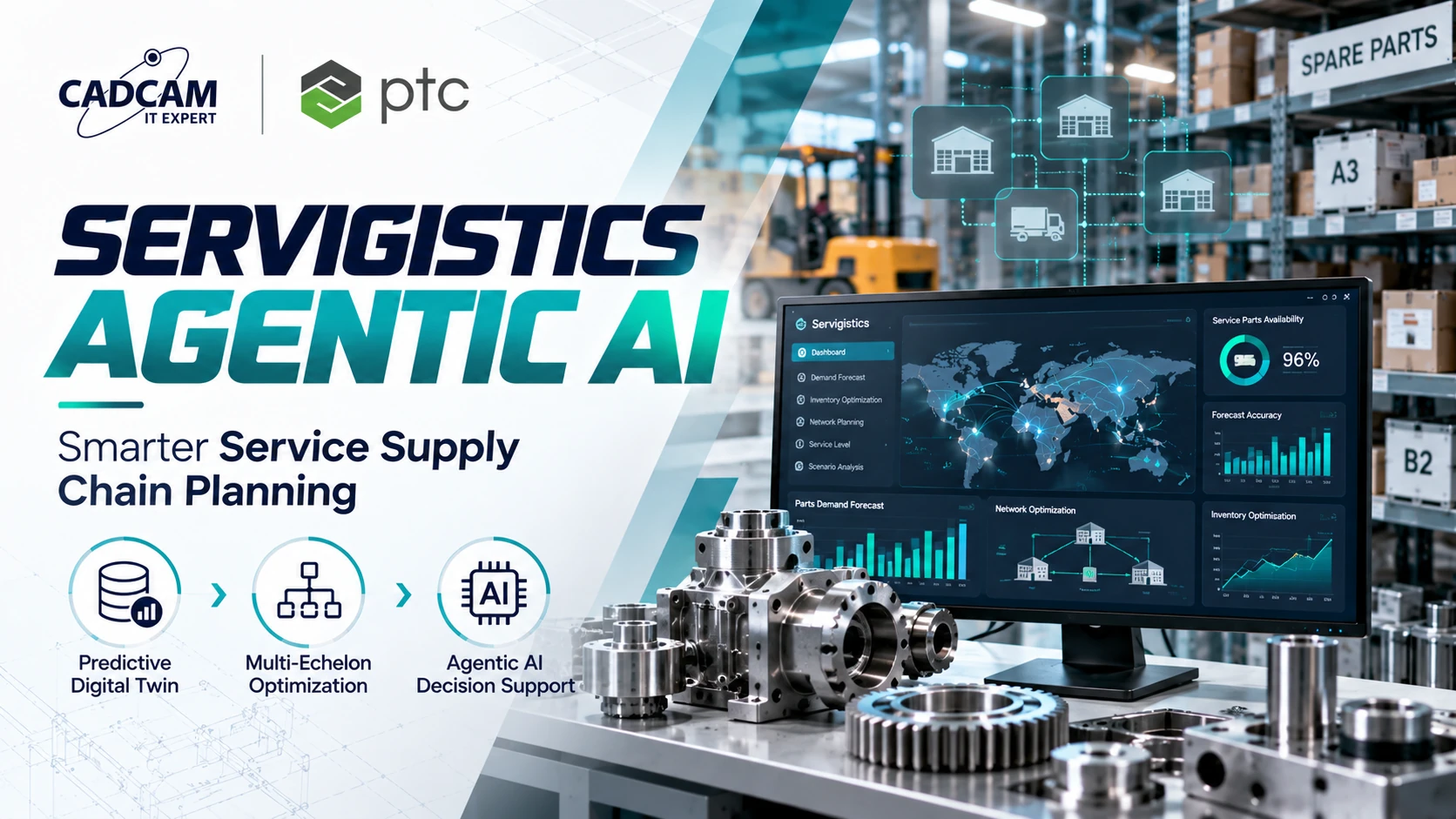
Within the service supply chain, PTC states that Servigistics has used AI and Machine Learning for many years to support activities such as forecasting and service supply chain optimization.
Design → PLM → ALM → Manufacturing Context → Service → Service Supply Chain
Embedded AI: Advise – Assist – Automate
One of the clearest ways to understand PTC’s AI strategy is through the Advise – Assist – Automate model.
1. Advise – AI Provides Information and Insights
At the Advise level, AI agents can help users access knowledge, answer questions, summarize content, and retrieve relevant information directly within a workflow.
The objective is to help users access the right information faster without manually searching across multiple data sources.
2. Assist – AI Helps Users Perform Work
At the Assist level, AI goes beyond providing information and helps users complete steps within a workflow.
This can reduce manual tasks and allow users to focus more attention on decisions that require professional expertise.
3. Automate – AI Automates Workflows
At the Automate level, AI agents can execute workflows with lower levels of human intervention, connect systems, monitor data, and perform actions according to established logic.
Advise → Assist → Automate
Why Is Product Data Important for Industrial AI?
An AI model becomes genuinely useful in an engineering environment when it can work with accurate, contextual, and appropriately governed data.
For manufacturing companies, data may be distributed across multiple systems:
- CAD.
- PLM/PDM.
- BOM.
- Requirements.
- Engineering Change.
- Manufacturing information.
- Service records.
If data is fragmented, duplicated, or lacks version control, enterprise-scale AI deployment may become difficult.
This is why PTC emphasizes a strong product data foundation as an important basis for AI to generate contextual insights and actions.
For businesses building a centralized product data foundation, see the overview of PTC Windchill.
What Role Do AI Agents Play in Industrial Software?
AI Agents represent an important direction in the development of Generative AI. Instead of only responding to a question, an agent can understand context, support reasoning, and take actions toward a defined objective.
In product development environments, the potential of agents lies in their ability to operate directly within the workflows already used by engineers and product teams.
This creates an important distinction between a standalone AI chatbot and embedded industrial AI that has access to relevant enterprise context.
PTC’s Three Principles for AI Investment
PTC identifies three important principles for its AI investments: Valuable, Scalable, and Responsible.
Valuable – Creating Practical Value
AI should focus on real customer problems and use cases with the potential to create value rather than applying AI simply because it is a technology trend.
Scalable – Designed for Enterprise Scale
AI solutions need to be applicable at enterprise scale and across technologies and stages of the product lifecycle.
Responsible – Responsible AI
PTC emphasizes transparency, privacy, security, IP protection, and data governance as part of its approach to Responsible AI.
AI Governance in the Enterprise
When AI is given access to important engineering and product data, AI governance becomes an essential consideration.
PTC states that its AI governance framework considers factors including:
- Risk.
- Compliance.
- Privacy.
- IP protection.
- Transparency.
- Accountability.
For manufacturing organizations, these factors are especially important because CAD data, BOMs, requirements, and engineering documentation may contain core intellectual property.
What Should Manufacturers Prepare Before Implementing AI?
Before selecting an AI tool, businesses should evaluate their existing data foundation and workflows.
1. Identify Where Product Data Is Located
Review how CAD data, BOMs, documents, requirements, and engineering changes are currently stored and managed.
2. Evaluate Data Quality and Governance
Data should have appropriate structure, version control, access permissions, and clearly defined ownership.
3. Define a Specific AI Use Case
Instead of starting with the question “Which AI does the company need?”, businesses should begin with the problem they want to solve, such as information retrieval, workflow automation, design assistance, requirements management, or service improvement.
4. Evaluate Security and Intellectual Property
Businesses need to understand which data AI can access, where that data is processed, and what policies are in place to protect intellectual property.
5. Build an Implementation Roadmap
A specific and measurable use case is often a more practical starting point than attempting to deploy AI across the entire organization at once.
What Does AI at PTC Mean for Vietnamese Manufacturers?
For manufacturing companies in Vietnam, the important question is not only whether AI should be adopted, but also whether existing engineering data is sufficiently prepared to support AI.
Businesses working with large volumes of CAD files, BOMs, engineering documents, and engineering change processes may need to establish stronger data foundations and workflows before AI can create value at scale.
Under PTC’s approach, AI is connected to the product lifecycle rather than existing as a separate tool. This connects AI directly to the data and processes used every day by engineering, product development, and service teams.
CADCAM SOFTWARE – PTC Gold Partner in Vietnam
CADCAM SOFTWARE is a PTC Gold Partner in Vietnam, providing and supporting PTC solutions for businesses involved in product design, product development, and product lifecycle management.
Organizations interested in PTC Creo, Windchill, or related solutions can contact CADCAM SOFTWARE to evaluate their requirements, number of users, current workflows, and appropriate implementation scope.
Explore more PTC solutions from CADCAM SOFTWARE.
For PTC’s official Artificial Intelligence strategy, visit Artificial Intelligence at PTC.
 FAQ – AI at PTC
What Is AI at PTC?
AI at PTC is the strategy of embedding artificial intelligence into solutions and workflows across the product lifecycle, including CAD, PLM, ALM, and service.
Does PTC Creo Use AI?
Yes. PTC is integrating AI capabilities into Creo to support task automation, improve productivity, and assist engineers during the design process. Creo also includes Generative Design capabilities that help users explore and optimize design alternatives.
What Is Windchill AI?
Windchill AI brings Generative AI and Agentic AI into the PLM environment to support workflows, extract insights from product data, and improve productivity.
How Is an AI Agent Different From a Chatbot?
A chatbot primarily focuses on question-and-answer interaction, while an AI Agent can be designed to understand context, perform workflow steps, and take actions toward a specific objective.
Is Product Data Important for AI?
Yes. In industrial environments, structured and well-governed product data gives AI the context needed to provide useful information and support workflows.
Which PTC Products Use AI?
PTC currently describes AI applications across Creo, Windchill, Codebeamer, ServiceMax, and Servigistics, supporting different stages of the product lifecycle.
Where Should a Business Start With AI Implementation?
A business should begin by defining a specific problem, evaluating its existing data, access permissions, security requirements, and workflows before selecting AI technology.
PTC Solution Consulting for Businesses
CADCAM SOFTWARE supports businesses in evaluating and implementing PTC solutions based on practical requirements, from CAD design with Creo to product data and lifecycle management with Windchill.
CADCAM SOFTWARE CO., LTD.
Hanoi Office: No. 25, Alley 34, Giap Nhat Street, Thanh Xuan Ward, Hanoi, Vietnam
Ho Chi Minh City Office: R.1508, Tower A, Masteri Centre Point, N2 Street, Long Binh Ward, Ho Chi Minh City, Vietnam
Tel: 024 6673 7986 | Hotline: 0907 658 000
Email: info@cadcamsoftware.vn | Website: cadcamsoftware.vn