
Creo for Startups: How PTC’s Creators Program Supports Product Development
Creo for Startups provides an opportunity for eligible startups to access professional product design technology while managing the software costs associated with early-stage product development. Through the PTC Creators Program, PTC offers eligible startups discounted access to Creo for up to three years.
For hardware startups developing machinery, robotics, industrial equipment, medical technology or other physical products, CAD is more than a tool for creating attractive 3D geometry. Engineering data must support design iterations, assemblies, drawings, prototypes and the transition toward manufacturing.
PTC Creo provides professional 3D product design capabilities including parametric modeling, part design, assembly design, engineering drawings and additional engineering capabilities that can support a growing product development workflow.
What Is Creo for Startups?
Creo for Startups refers to the use of PTC Creo by early-stage companies developing physical products, particularly in the context of PTC’s Creators Program for eligible startups.
According to PTC, one of the program’s key benefits is heavily discounted access to Creo for eligible startups for up to three years. This can help reduce initial software overhead while startups direct resources toward engineering, prototyping, testing and other business priorities.
What Is the PTC Creators Program?
The PTC Creators Program is an initiative designed to make Creo more accessible to eligible startups and help them develop innovative products using professional product design technology.
PTC highlights discounted software access and comprehensive product design capabilities as key program benefits. Eligibility criteria and current commercial terms should be verified with PTC because participation should not be assumed for every newly established business.
Why Do Startups Need Professional CAD?
Early concepts can often begin with sketches or simple models, but engineering requirements typically increase as a product approaches functional prototyping and manufacturing.
Teams may need to manage dimensions, design intent, assemblies, drawings, materials, interfaces and repeated engineering changes. Building structured product data early can reduce the amount of redesign required as the product matures.
How Can Creo Support Startup Product Development?
At the core of the Creo environment, Creo Parametric provides parametric 3D CAD capabilities for creating parts, assemblies and engineering drawings using dimensions, constraints, features and design relationships.
1. Move from Concept to Engineering Geometry
Creo can help a startup turn an initial product concept into controlled 3D engineering geometry that provides a foundation for subsequent design iterations.
2. Iterate with Parametric Modeling
Startup products often change repeatedly after prototype reviews and testing. Parametric modeling enables dimensions, features and geometric relationships to be defined so dependent geometry can respond to engineering changes according to established design intent.
Learn more in What Is Creo Parametric? Applications in 3D Mechanical Design.
3. Develop Product Assemblies
Assembly design enables teams to develop products consisting of multiple components while evaluating component relationships, fit and potential interference.
4. Generate Engineering Drawings
Associative engineering drawings can be generated from 3D product geometry to communicate dimensions, annotations and manufacturing information to suppliers and production teams.
5. Design Sheet Metal and Complex Surfaces
Hardware products may require sheet metal enclosures, housings or complex surfaces. Creo provides capabilities that extend beyond basic solid modeling to address these engineering workflows.
6. Work with Multi-CAD Data
Startups frequently collaborate with suppliers and engineering partners that use different CAD systems. Multi-CAD workflows can therefore become important as the supplier network expands.
From Concept to Manufacturing
A hardware startup may follow a workflow such as Product Idea → Concept Design → 3D CAD → Engineering Validation → Prototype → Design Iteration → Engineering Drawing → Manufacturing Preparation → Production.
Creo can serve as the design environment at the center of this workflow, while additional Creo capabilities can extend engineering activities into simulation, tooling and manufacturing where appropriate.
How Can Simulation Help a Startup?
Physical prototypes remain important, but engineering simulation can help teams evaluate suitable design questions before committing every design variation to a physical prototype.
Creo simulation technologies provide engineering analysis capabilities connected with Creo product geometry, allowing teams to evaluate and refine appropriate product behavior earlier in the development process.
Can Creo Connect Design with CNC Manufacturing?
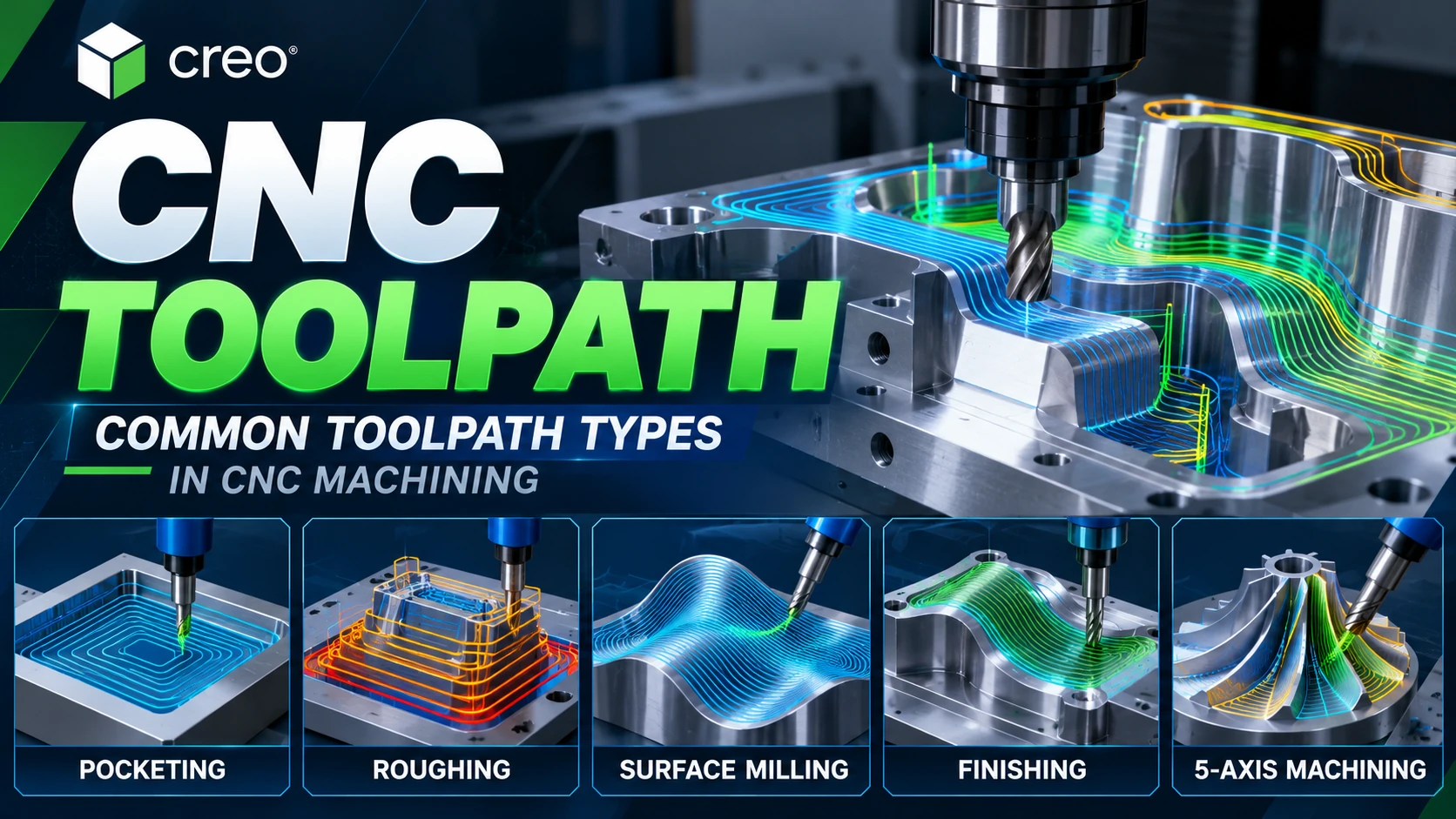
Yes. For startups involved in CNC prototyping or manufacturing, Creo CAM connects CAD geometry with CNC programming workflows, including toolpath generation, machining simulation and downstream NC programming capabilities.
Which Startups Should Consider Creo?
Creo is particularly relevant to startups developing engineered physical products such as robotics, industrial equipment, automation systems, electronics enclosures, mobility products, medical technology and other mechanically complex products.
| Startup Type | Typical Engineering Need | Capabilities to Consider |
|---|---|---|
| Robotics | Parts, assemblies and mechanisms | Creo Parametric and simulation capabilities |
| Industrial Equipment | Machine design and drawings | Creo Parametric |
| Hardware Products | Housings, components and prototypes | CAD, Sheet Metal and Surfacing |
| Manufacturing Startup | CAD-to-CNC workflow | Creo Parametric and Creo CAM |
| Complex Products | Iteration and engineering validation | Creo CAD and appropriate extensions |
5 Benefits of Creo for Startups
1. Build Structured Product Data Early
A well-structured parametric model helps preserve design intent as a product evolves through multiple generations.
2. Accelerate Design Iterations
Associative and parametric product data can reduce repetitive remodeling when dimensions or design features change.
3. Extend from Design Toward Manufacturing
The Creo ecosystem extends beyond 3D modeling into simulation, tooling and CNC manufacturing depending on the capabilities required.
4. Support Increasing Product Complexity
A startup product may grow from a small collection of components into a larger assembly. A scalable engineering platform can support this evolution without requiring an immediate change of the entire CAD workflow.
5. Access a Program Designed for Eligible Startups
The PTC Creators Program provides eligible startups with discounted access to Creo for up to three years, potentially reducing the software overhead associated with early product development.
Is the PTC Creators Program Free?
PTC describes the program as providing heavily discounted Creo access for eligible startups rather than presenting it as a universally free commercial license. Startups should verify current eligibility requirements, packages and commercial terms before making purchasing assumptions.
Should Startups Choose CAD Based Only on License Price?
No. License price is important, but startups should also evaluate hardware requirements, training, engineering productivity, data compatibility, implementation, technical support and the long-term cost of maintaining or migrating product data.
How Should a Startup Evaluate Creo?
- Define the physical product being developed.
- Determine the expected number of engineering users.
- Evaluate part and assembly complexity.
- Identify Sheet Metal and Surfacing requirements.
- Determine whether engineering simulation is required.
- Identify Mold Design or CAM requirements.
- Review CAD data exchange requirements with suppliers and customers.
- Verify current PTC Creators Program eligibility.
FAQ About Creo for Startups
What is Creo for Startups?
Creo for Startups refers to the use of PTC Creo by startup companies developing physical products, particularly through opportunities such as the PTC Creators Program for eligible startups.
What is the PTC Creators Program?
The PTC Creators Program is an initiative designed to help eligible startups access Creo and professional product design capabilities while reducing initial software costs.
Is Creo free for startups?
PTC describes the Creators Program as offering heavily discounted access to Creo for eligible startups. Startups should verify current program terms rather than assuming that Creo is free for every startup.
How long can eligible startups receive discounted Creo access?
PTC states that eligible startups can receive discounted Creo access for up to three years under the Creators Program.
Is Creo suitable for hardware startups?
Creo can be relevant to hardware startups that require mechanical product design, assemblies, sheet metal, surfacing, engineering drawings or additional simulation and manufacturing capabilities.
Does Creo support CNC manufacturing?
Yes. Creo CAM provides integrated CAD/CAM capabilities for creating toolpaths and supporting CNC programming workflows.
Which Creo package should a startup choose?
The appropriate configuration depends on the product, engineering workflow, number of users and required capabilities. A startup focused on core 3D CAD will have different requirements from one that also needs simulation, tooling or CNC programming.
Explore Creo for Startup Product Development
Startup teams should evaluate CAD technology against their engineering workflow and long-term product roadmap rather than focusing only on initial software price.
CADCAM SOFTWARE is a PTC Gold Partner in Vietnam providing PTC Creo licensing, configuration consulting, implementation, training and technical support for product design and engineering organizations.
Read the official PTC Creo for Startups article or explore PTC Creo for additional product information.