What Is PTC Windchill? A Practical Guide to PLM Software
For engineering organizations developing complex products, Windchill becomes especially relevant when design teams grow, multiple CAD systems are involved, or product changes must be coordinated across locations and departments.
What Is PTC Windchill in Product Lifecycle Management?
Product Lifecycle Management is an approach to managing the information and processes associated with a product, from early development through manufacturing, service and later lifecycle stages.
Windchill provides the PLM environment in which product data objects, CAD documents, part structures, BOMs, engineering changes and release processes can be managed with appropriate access control and traceability.
The important distinction is that PLM does not simply store files. It provides context: which product configuration a component belongs to, which revision has been approved, what has changed and which downstream processes may be affected.
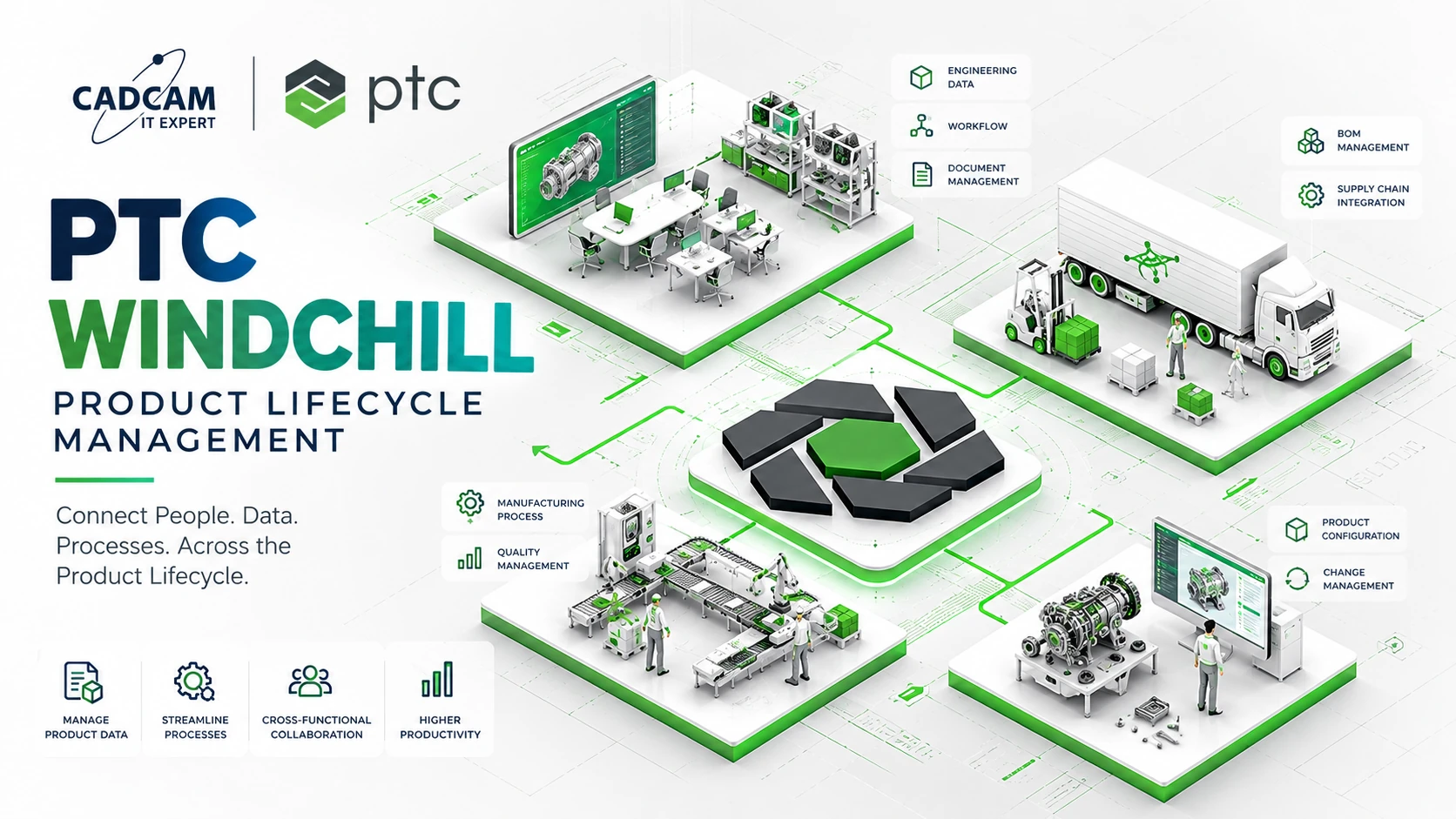
7 Core Capabilities of Windchill PLM Software
1. CAD Data and Engineering Document Management
Windchill manages engineering information such as CAD models, assemblies, drawings and related documents. Its CAD data management capabilities include CAD Documents, workspaces, check-in/check-out operations and relationships among engineering objects.
Windchill also supports multi-CAD environments. Specific integrations depend on the supported CAD application, connector, version and implementation configuration.
2. Revision and Release Control
Engineering teams frequently revise designs before they are ready for manufacturing. Windchill helps distinguish development iterations, formal revisions and lifecycle states so users can identify which information is approved for downstream use.
3. Bill of Materials Management
A BOM describes the parts and assemblies that make up a product. Windchill supports product structures and BOM management linked to engineering information.
Depending on the licensed capabilities and implementation scope, organizations may manage Engineering BOMs (eBOMs), Manufacturing BOMs (mBOMs) and other downstream product structures. Engineering and manufacturing BOMs serve different purposes and should not be assumed to be identical.
4. Engineering Change Management
A design modification may affect drawings, assemblies, BOMs, manufacturing instructions and supplier information. Windchill supports structured change processes to evaluate, approve and trace these changes.
Organizations can configure workflows around engineering change requests, notices and related governance requirements.
5. Product Configuration and Variability Management
Manufacturers producing multiple product variants need to identify the correct parts and configurations for each offering. Windchill provides product configuration and variability management capabilities within the appropriate solution scope.
6. Manufacturing Process Management
Windchill can connect engineering definitions to manufacturing-oriented product structures, process planning and work instructions when relevant capabilities are deployed.
It does not replace dedicated CAM software for CNC toolpath programming or MES software for shop-floor execution.
7. Cross-Functional and Supplier Collaboration
Windchill enables controlled access to product information for engineering, manufacturing, quality and supply chain stakeholders. Collaboration depends on configured permissions, workflows and security policies.
How Windchill Connects Creo Design Data to Manufacturing
- Design: Engineers create or modify parts, assemblies and drawings in Creo Parametric.
- Data management: CAD Documents are managed through the configured Windchill workspace and check-in/check-out workflow.
- Review: Responsible users verify the design, associated documents and product structure.
- Release: Approved information progresses through defined lifecycle states.
- Manufacturing preparation: Downstream teams use controlled engineering information and relevant BOM structures.
- Change: Subsequent modifications follow an established review, approval and revision process.
This is an illustrative workflow. Actual release states, responsibilities and system integrations must be configured around each organization’s processes.
Engineering Example: Managing Changes to an Injection Mold
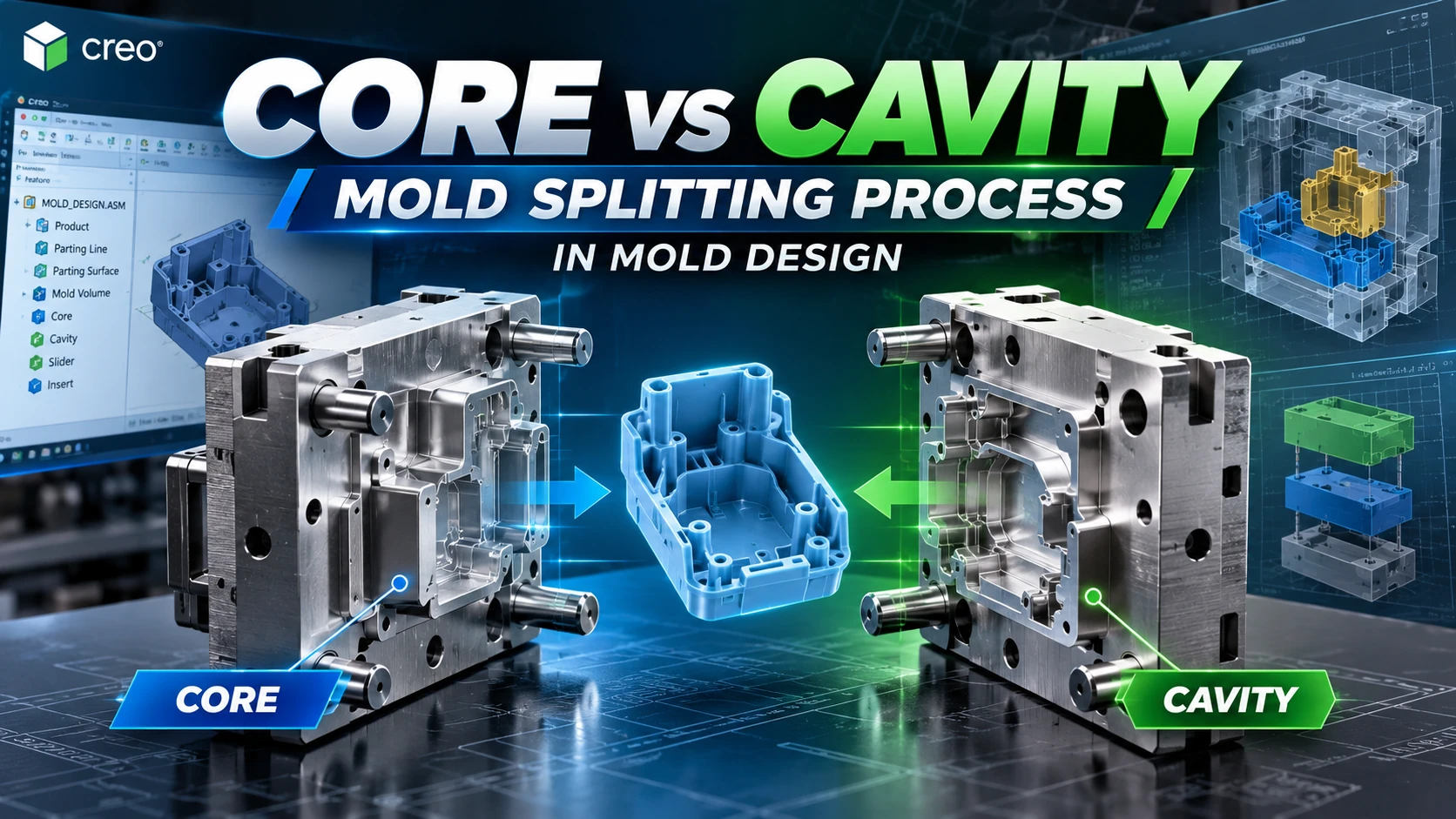
Consider a manufacturer developing an injection mold with core and cavity components, mold plates, ejector mechanisms and standard parts. During mold trials, the engineering team identifies a geometry change that affects multiple components and drawings.
Without controlled data management, the CAM programmer or manufacturing team may continue working from an outdated drawing while the design team has already updated the CAD assembly.
A configured Windchill process can help record the engineering change, identify affected product information, coordinate review and control the release of revised data. Together with PTC Creo Parametric, it supports a connected engineering data management workflow.
This is an illustrative engineering scenario, not a measured customer implementation or documented case study.
Windchill vs PDM, CAD and ERP
| System | Primary Purpose | Typical Example |
|---|---|---|
| CAD | Create and edit engineering geometry | Creo Parametric for 3D product design |
| PDM | Control engineering files and revisions | CAD data and design collaboration |
| PLM | Manage product information and lifecycle processes | Windchill for BOMs, changes and configurations |
| ERP | Manage enterprise resources and business operations | Purchasing, planning and finance |
| MES | Manage manufacturing execution | Production orders and shop-floor tracking |
PDM is a foundational capability within a broader PLM platform. Organizations may begin with engineering data management and expand their PLM scope as business requirements mature.
Benefits and Implementation Considerations
- Controlled engineering information: Reduce ambiguity about the current approved design.
- Change traceability: Improve visibility into revision history and related product objects.
- Cross-functional coordination: Provide governed product information to authorized teams.
- Process consistency: Standardize review, approval and release workflows.
- Scalability: Support complex products, variants and distributed engineering teams.
However, PLM cannot compensate for inconsistent part numbering, incomplete BOMs, undefined ownership or weak user adoption. Successful implementation requires data preparation, process design, integration planning, training and ongoing governance.
Engineering Perspective from CADCAM SOFTWARE: Evaluate a PLM platform using a representative product assembly, its CAD drawings, BOM and change history. Ask the solution team to demonstrate revision control, change impact analysis and release permissions rather than relying only on feature descriptions.
When Should a Manufacturer Consider Windchill?
Windchill is worth evaluating when multiple engineers collaborate on the same product, several CAD applications are used, product configurations are complex or engineering changes regularly affect manufacturing and quality processes.
Smaller organizations with limited product complexity may first assess whether their immediate requirements are primarily PDM-related or justify broader PLM capabilities.
Need to improve CAD data, BOM or engineering change management?
Explore PTC Windchill PLM solutions at CADCAM SOFTWARE and discuss your users, engineering workflows and integration requirements.
Hotline: +84 907 858 000 | Email: info@cadcamsoftware.vn
How Does Windchill Integrate with Creo?
PTC Creo focuses on product design, while Windchill provides product data and lifecycle process management. With an appropriate integration, engineering teams can manage Creo CAD information within a governed PLM environment.
Windchill also supports multi-CAD data management, although connector capabilities and supported versions should be verified for the intended environment.
What to Assess Before Implementing Windchill
- Which CAD systems and engineering file formats are currently in use?
- How many users need authoring, review or read-only access?
- Are part numbering and BOM conventions standardized?
- Who owns design reviews, approvals and release decisions?
- Which ERP, MES or other enterprise integrations are required?
- Is an on-premises, cloud or Windchill+ SaaS deployment more appropriate?
- What historical data must be migrated and validated?
The appropriate modules, deployment approach and licensing should be confirmed through a requirements assessment rather than assumed from a generic product description.
Frequently Asked Questions About PTC Windchill
1. What Is PTC Windchill?
PTC Windchill is an enterprise PLM platform for managing product data, CAD documents, BOMs, revisions, engineering changes and lifecycle processes.
2. Is Windchill a PDM or PLM System?
Windchill is a PLM platform that includes PDM capabilities. PDM focuses on engineering data, while PLM covers broader product lifecycle processes.
3. Does Windchill Integrate with Creo?
Yes. Windchill supports Creo CAD data management, including managed documents, workspaces and revision-related workflows.
4. Can Windchill Manage Multiple CAD Systems?
Yes. Windchill supports multi-CAD environments, subject to supported integrations, versions and configuration.
5. Does Windchill Support BOM Management?
Yes. It supports product structures and BOM management, with extended capabilities depending on the deployed solution.
6. Does Windchill Replace ERP?
No. Windchill manages product information and lifecycle processes, while ERP handles enterprise resource and business operations.
7. Is Windchill Available as SaaS?
PTC offers Windchill+ as a SaaS option, alongside other deployment approaches. Suitability depends on business and technical requirements.
8. How Much Does Windchill Cost?
Pricing depends on the selected package, user roles, deployment scope and related services. An official quotation is required for a specific project.
Conclusion
PTC Windchill helps manufacturers move beyond file-based engineering data management toward controlled product information and lifecycle processes. Its value becomes particularly relevant when CAD data, BOMs, engineering changes and cross-functional collaboration must remain connected.
Request a PTC Windchill Consultation or Demo
CADCAM SOFTWARE can help assess engineering workflows, user requirements and the appropriate scope for PLM adoption.
Hotline: +84 907 858 000
Email: info@cadcamsoftware.vn