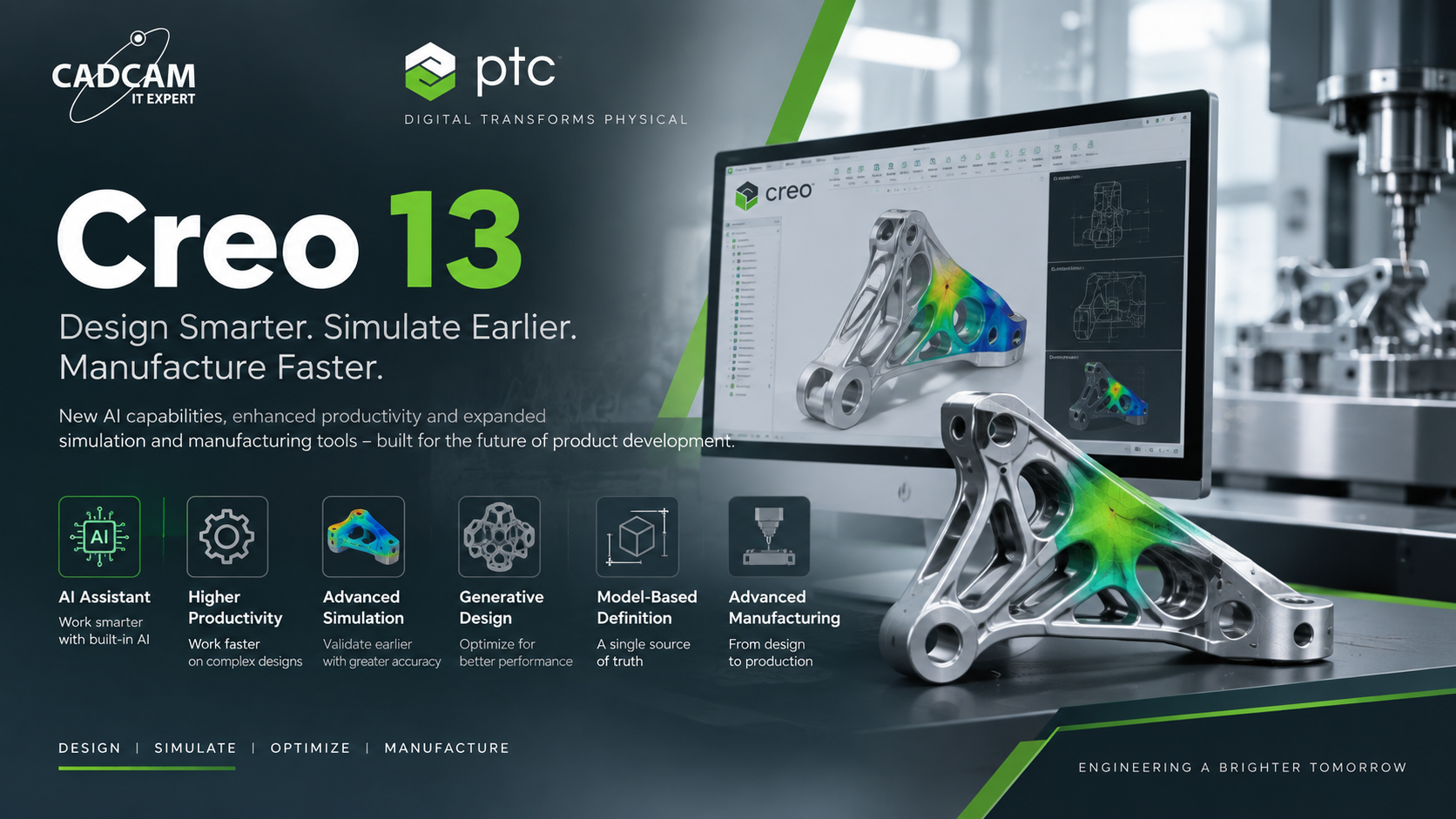
Discover Creo 13 with the latest enhancements in AI Assistant, Simulation, Generative Design, MBD, and Manufacturing for industrial enterprises.
PTC Creo 13 is the latest release of the Creo 3D design platform, focusing on improving engineering productivity, integrating artificial intelligence, strengthening simulation capabilities, and expanding manufacturing tools.
Compared with previous versions, Creo 13 does more than introduce new CAD features. It clearly reflects PTC’s direction toward connecting the entire product development process—from design and analysis to optimization and manufacturing.
One of the most notable highlights of this release is the introduction of Creo AI Assistant, together with a wide range of enhancements in Productivity & Usability, Simulation-Driven Design, Generative Design, Model-Based Definition, and Advanced Manufacturing.
Creo AI Assistant – Bringing AI Directly into the Design Environment
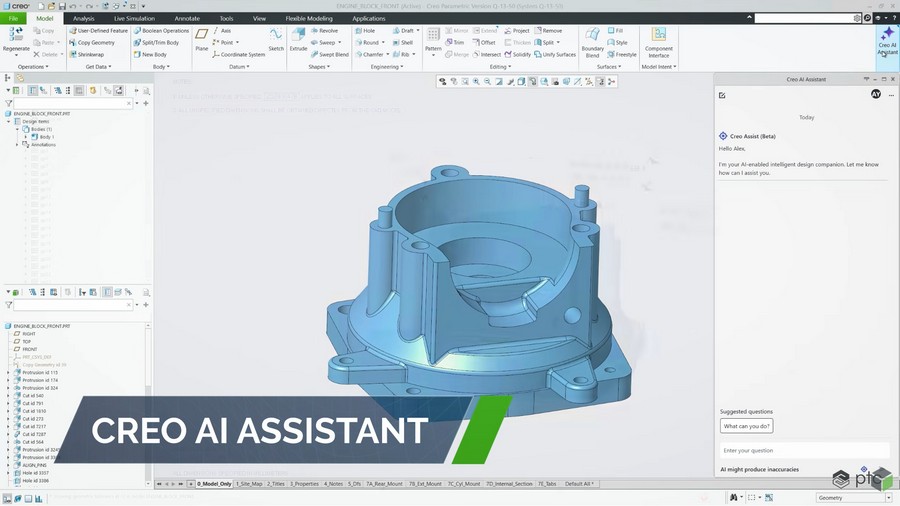
Creo 13 introduces Creo AI Assistant, an AI-powered assistant integrated directly into the Creo working environment to help engineers access information and perform design tasks more efficiently.
Creo AI Assistant is built around three core capability levels.
Advise provides guidance and best practices throughout the design process.
Assist is model-aware, allowing it to understand the context of the active design and provide more relevant information based on the engineering data being handled.
Automate is designed to support the automation of selected engineering tasks and complex analysis workflows, while keeping engineers in control of review and approval.
Integrating AI directly into the CAD environment can help reduce time spent searching for technical documentation, shorten the learning curve for new users, and minimize repetitive design operations.
Improved Productivity for Models and Large Assemblies
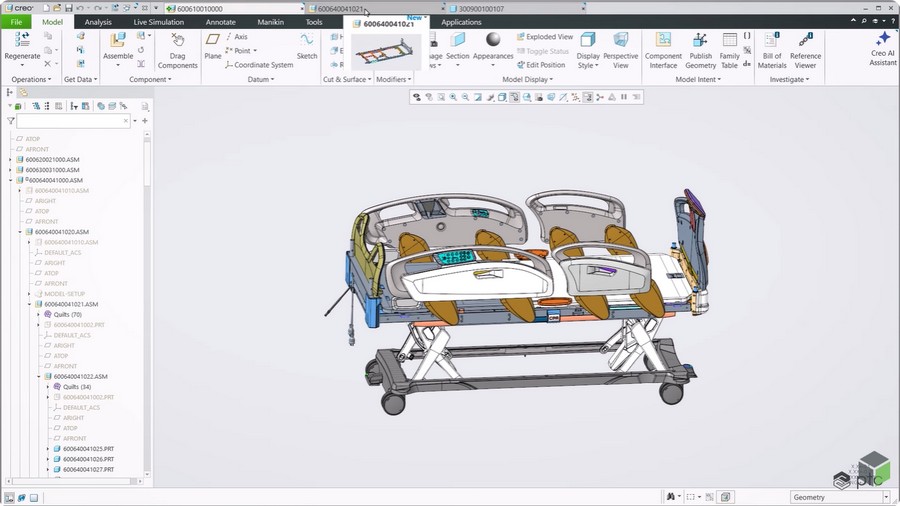
In addition to AI, Creo 13 continues to improve Productivity & Usability, particularly when working with complex models and large assemblies.
The new release introduces improved control over the assembly regeneration process, tab-based model navigation, and expanded Feature Presets to reduce repetitive setup operations.
Sheet Metal tools have also been enhanced, including the ability to export flat patterns directly to DXF or DWG formats.
Creo 13 also improves Advanced Surfacing and Multibody Design, making it easier to reuse design data and create complex geometry.
These enhancements are particularly valuable for manufacturing companies working with products that contain a large number of components and complex assembly structures, where software performance directly affects the productivity of Engineering and R&D teams.
Simulation-Driven Design Helps Identify Issues Earlier
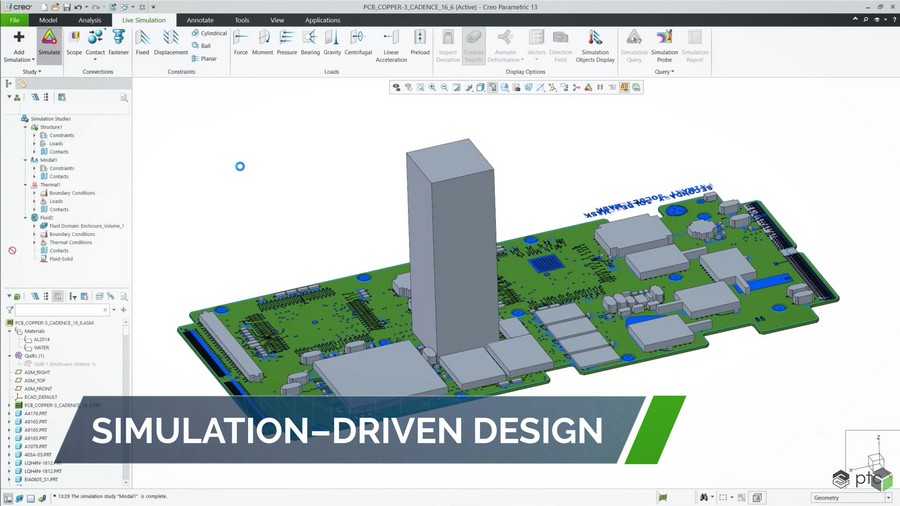
One of the key trends in modern product development is the integration of simulation earlier in the design process.
Creo 13 continues to advance Simulation-Driven Design, enabling engineers to evaluate product performance during the design stage instead of waiting until the end of the process to perform analysis.
The new release expands real-time simulation capabilities, supports ECAD assemblies, and improves analysis workflows involving bolts, preload conditions, and multiphysics.
With this approach, engineers can perform the following iterative loop:
Design → Simulate → Evaluate → Optimize
from the early stages of product development.
This can help manufacturers identify technical issues sooner, reduce the number of design revisions, and decrease dependence on physical prototypes.
Expanded Generative Design Capabilities
Creo 13 further enhances Generative Design, allowing engineers to optimize individual components within the context of the complete assembly.
Instead of optimizing a single part in isolation, engineers can evaluate constraints and operating conditions that are directly related to the overall assembly environment.
Generative Design can be applied to engineering challenges such as weight reduction, material optimization, stiffness improvement, and the evaluation of multiple design alternatives before selecting the most suitable solution.
Combining Generative Design with Simulation enables a more systematic optimization process, particularly in industries where performance and weight are critical design requirements.
Enhanced Model-Based Definition
Creo 13 continues to advance Model-Based Definition – MBD, with the objective of using the 3D model as the central source of engineering information throughout the product lifecycle.
Key enhancements include customized 3D PDF templates, improvements to GD&T Advisor, EZ Tolerance, and better management of datum references at the assembly level.
With MBD, manufacturers can gradually reduce their dependence on traditional 2D drawings and use the 3D model to communicate engineering information across different departments.
This is an important foundation for transitioning from conventional engineering processes to a more integrated Digital Engineering environment.
Faster Composite Design Workflows
Creo 13 also introduces several improvements for Composite Design.
One of the key enhancements is significantly faster ply-transition calculation for complex composite models.
The new release also supports copy-and-paste functionality for composite designs to reduce repetitive work, while improved curve-based draping increases accuracy when working with complex geometries.
These capabilities can provide significant value in industries such as aerospace, automotive, and other applications where composite materials are used to reduce weight while maintaining structural performance.
Creo 13 Expands Advanced Manufacturing Capabilities
Creo 13 is not limited to design improvements. It also expands a range of tools for manufacturing.
For subtractive manufacturing, the release introduces 5-Axis Swarf Milling and improves the NC Parameters interface, making machining parameters easier to understand and manage.
In Mold Design, Creo 13 improves conformal cooling channel design capabilities.
For Additive Manufacturing, the software provides greater control over geometry and process-related parameters.
These enhancements move Creo closer to a more integrated workflow:
CAD → CAM → Manufacturing
using a consistent engineering data foundation.
Improvements for Electrical Design and Harness Engineering
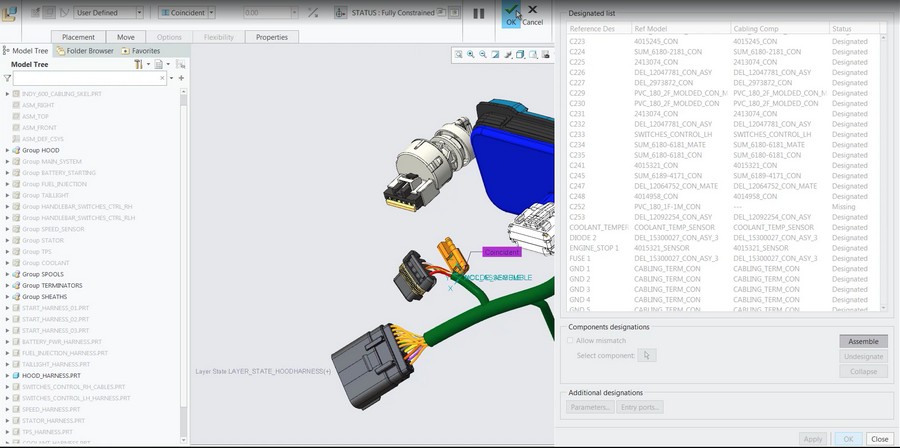
Creo 13 also expands Design for Electrification capabilities, addressing the growing demand for products that combine mechanical and electrical systems.
The new release enables harnesses to be managed as independent components, supports the creation of bundles from schematic data, and includes support for the IEC 81346-2 standard.
These enhancements help improve collaboration between ECAD and MCAD teams in complex product development projects.
What Business Value Does Creo 13 Deliver to Manufacturers?
The main value of Creo 13 is not limited to any single feature. Its strength lies in bringing multiple engineering technologies together within a connected product development process.
AI helps engineers work more efficiently.
Simulation enables earlier design validation.
Generative Design supports product optimization.
MBD helps standardize engineering information.
Manufacturing tools help transfer design data directly into production processes.
Together, these capabilities can help manufacturers reduce engineering rework, shorten the product development cycle, and increase the reuse of engineering data.
Should Your Company Upgrade to Creo 13?
Upgrading to Creo 13 should be based on the specific needs of each organization.
If your engineering team frequently works with large assemblies, uses Simulation, Generative Design, MBD, or requires integrated CAD/CAM workflows, Creo 13 may provide substantial productivity and process benefits.
However, before upgrading, manufacturers should evaluate their current Creo version, licensing environment, workstation configuration, active modules, and compatibility with existing engineering data or PLM systems.
A software upgrade only creates real business value when it improves engineering productivity, design quality, or time-to-market.
PTC Creo 13 Consulting for Industrial Enterprises
CADCAM Software Co., Ltd. provides consulting, software licensing, implementation, and training services for PTC Creo solutions for manufacturing companies in Vietnam.
Companies currently using an older version of Creo or evaluating the adoption of Creo 13 can contact us for needs assessment, module selection, and solution configuration recommendations.
Hotline: 0906 621
CADCAM Software Co., Ltd.
Consulting – Software Licensing – Implementation – PTC Creo Training